The Curious Case of Britain’s Ancient Trees
(And why Europe looks at us with a little envy)
It is one of those facts that tends to surprise people, usually somewhere between mild disbelief and polite scepticism, that Britain has more ancient trees than the rest of Europe put together.
I’ve learned to pause before saying it out loud, because it sounds like the sort of thing a Dendrophile might make up in a moment of over-enthusiasm, like claiming to recognise individual Oaks by their silhouettes. But it’s true. Statistically, verifiably, gloriously true.
While much of Europe lost its ancient trees to intensive forestry, war, agriculture and neatness, Britain somehow… didn’t. Or at least, not to the same extent. We still have tens of thousands of veteran and ancient trees scattered across parks, churchyards, commons, deer parks, field boundaries, and the occasional improbable pub car park.
It’s not that we were more enlightened. It’s more, we were untidy in a particularly helpful way.
In Britain, trees had jobs. They marked boundaries. They shaded livestock. They fed people and pigs. They framed landscapes and looked good next to big houses. So, they were tolerated, sometimes even cherished, long after they had stopped being useful in any modern sense.
Across much of Europe, trees were managed for timber. Straightness and efficiency mattered. Trees were harvested when they reached maturity, not allowed to wobble on for centuries developing cavities, fungal partnerships and a distinctly eccentric appearance. Ancient trees, as a concept, never really got going.
In Britain, eccentricity flourished.
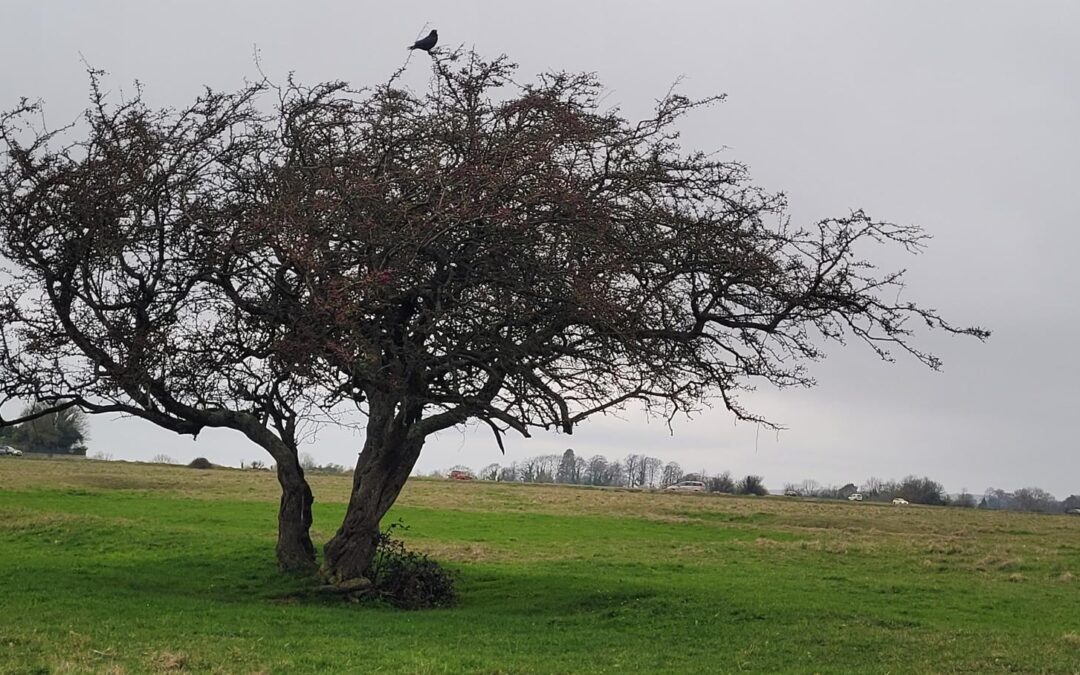
If you spend enough time with ancient trees, you start to realise they all look slightly ridiculous. Hollow trunks, massive girth, branches that go off at angles no sensible structure would allow. Trees that appear to be mostly air, yet stubbornly alive. They are not neat, and they are not efficient. They are magnificent!
And, fortunately, we have so many of them.
The Ancient Tree Inventory records over 200,000 veteran and ancient trees in Britain, and the count is rising. That’s more than all the known ancient trees in the rest of Europe combined. France, Germany, Spain and Italy all together still don’t catch up. I imagine this is a slightly awkward statistic at international tree conferences.
https://www.ancienttreeforum.org.uk/ancient-trees/
Part of the reason is land use history. Britain’s long tradition of parkland trees, especially Oak, created ideal conditions for trees to grow old without being felled. Deer parks, estates, churchyards and commons became accidental sanctuaries. Trees were left standing because they were beautiful, symbolic, or just in the way of nothing much.
There’s also the matter of pollarding, an ancient management technique that extends tree life dramatically. By cutting branches high above animal browsing height, trees were harvested repeatedly without being killed. The result? Trees that are now 400, 600, even 1,000 years old and still ticking along, hollow and happy.
Europe, meanwhile, tended to clear and replant. Britain tends to leave things alone and complain about them.
A winning strategy, as it turns out.
Ancient trees are not just old. They are ecosystems in their own right. A single ancient Oak can support more species than an entire modern woodland. Beetles, fungi, birds, bats, and lichens all rely on decay, hollows, loose bark and dead wood.
Which brings me to the quiet tragedy: ancient trees are not replaceable. Not in human time. Planting a tree today is wonderful, but it will not be ancient until our great-great-great-grandchildren are old themselves. Ancient trees are not a renewable resource; they are a gift from the past that we are borrowing briefly.
And Britain, somehow, has been entrusted with a great many of them.
I often think about that when I stand next to a hollow Beech, perhaps, or a twisted Yew in a churchyard. These trees were already old when the country was learning to be a country. They have outlasted Kings & Queens, wars, plagues, fashions and planning policies. They do not need us to admire them, but they do need us to leave them alone in the right way.
Which is harder than it sounds.
Modern life is not kind to ancient trees. Compaction, development, over-tidying, safety fears, and misunderstanding. The temptation to make them look better often makes them worse. Ancient trees thrive on benign neglect, not improvement.
And yet, for all that, they are still here. Standing quietly in corners, leaning over fields, holding up fences and dropping leaves where they always have.
So next time you see a very old tree in Britain, take a moment. You are not just looking at a tree, you are looking at something Europe has largely lost: a living thread back through time, held in place by accident, habit and the British talent for leaving well enough alone.
A small triumph, really and one well worth keeping.