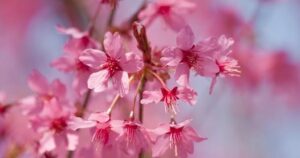
🌸 Spring’s Quiet Fireworks: The Importance of Tree Flowers in the UK 🌸
At this time of year, gardens, parks and hedgerows across the UK begin to change almost overnight. Buds swell, branches soften, and suddenly trees that looked lifeless just weeks ago burst into flower.
We often think of spring colour coming from bulbs or borders, but in reality, trees deliver one of the most important floral displays of the entire gardening year, not just for us, but for wildlife too.
Tree flowers are Spring’s starting signal.
The First Flowers of the Year
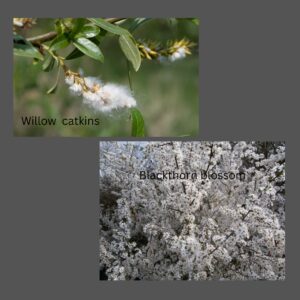
Long before leaves appear, many trees begin flowering. Hazel, Alder and Willow produce catkins in late Winter and early Spring, releasing pollen just as insects begin to emerge from dormancy. These early flowers are among the first reliable food sources available after Winter.
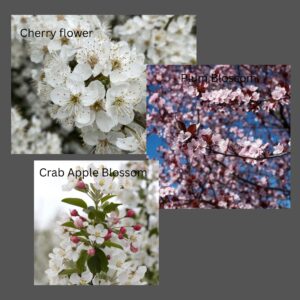
Soon after, come the blossom clouds we all recognise, blackthorn lighting up hedgerows, followed closely by cherry, plum and wild cherry. These frothy white and pink displays are far more than decoration. They provide essential nectar and pollen for bees, hoverflies and butterflies at a time when food is still scarce.
Without these early tree flowers, many pollinators simply wouldn’t make it through Spring.
Trees: The Unsung Heroes of Pollination
When we talk about pollinator plants, attention often turns to wildflowers or herbaceous borders. Yet trees quietly outperform almost everything else.
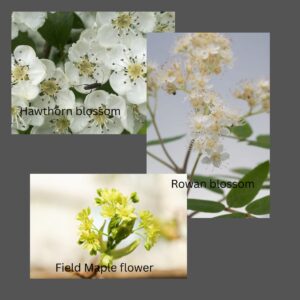
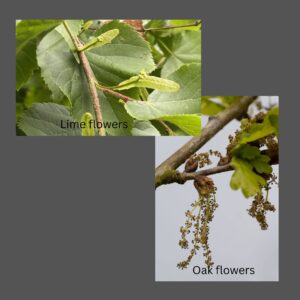
A single mature flowering tree can produce thousands, sometimes millions of blossoms, offering a vast food resource concentrated in one place. Research consistently shows that species such as Willow, Hawthorn, Rowan, Lime and Crab Apple provide crucial forage for insects from early Spring into Summer.
In short, planting one well-chosen tree can support more wildlife than an entire flowerbed.
A Seasonal Relay of Blossom
Nature works like a relay race, with different trees flowering in sequence:
- Late Winter: Hazel and Alder catkins
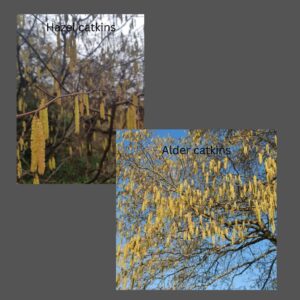
- Early Spring: Willow and Blackthorn
- Mid Spring: Cherry, Plum and Crab Apple
- Late Spring: Hawthorn, Rowan and Field Maple
- Early Summer: Lime and Oak flowers
This staggered flowering ensures pollinators have a continuous supply of food as temperatures rise and ecosystems awaken.
It’s a reminder that good garden planting isn’t just about colour, it’s about timing.
What Gardeners Can Do
Supporting tree flowers and the wildlife that depends on them is surprisingly simple.
🌳 Planting flowering trees where space allows
Even smaller gardens can accommodate species such as:
- Amelanchier
- Crab Apple
- Rowan
- Ornamental Cherry
- Hawthorn (excellent as a small tree or hedge)
✂️ Avoid heavy Spring Tree Pruning and Shaping
Many trees form flower buds the previous year. Pruning at the wrong time removes that vital nectar source before insects can benefit.
🌿 Let hedgerows flower
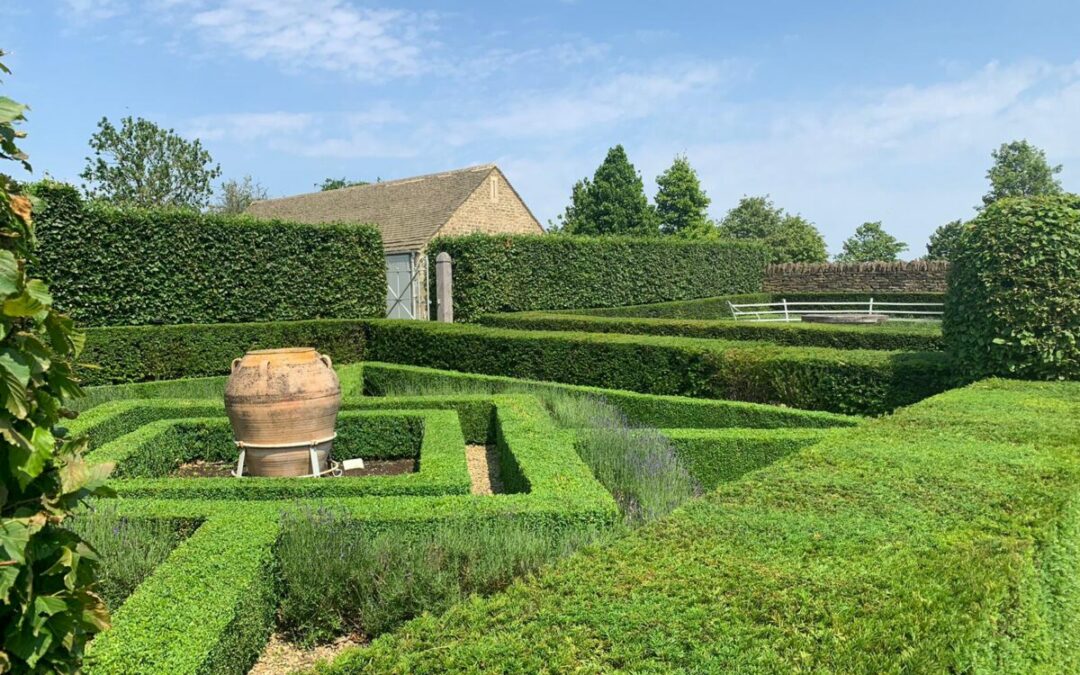
Delaying hedge trimming and shaping until after blossom dramatically increases food availability for pollinators.
🐝 Think beyond appearance
Choose trees that offer pollen, nectar, fruit and shelter, not just ornamental value.
More Than Just Beauty
Spring blossom signals something much bigger than the arrival of warmer weather. It marks the restart of ecological activity, insects feeding, birds nesting and entire food chains coming back to life.
The Tree Council’s Spring campaign encourages us to step outside and notice these seasonal changes, the catkins, blossom and swelling buds that reveal nature quietly getting back to work after Winter.
More can be found HERE https://treecouncil.org.uk/seasonal-campaigns/spring-in-your-step/
And once you begin looking closely, you realise that trees aren’t just part of the Spring display.
They are the display.
A Final Thought
Next time you walk beneath a flowering tree, pause for a moment. That brief burst of blossom represents months of preparation, supports countless insects and helps shape the health of our landscapes for the year ahead.
Planting and protecting flowering trees may be one of the simplest ways any of us can support nature from our own garden.
Spring, quite literally, starts in the branches.