Caring for Young Trees
A Small Investment Now Will Pay Dividends Later 🌳
Following on from my earlier email encouraging tree planting, it felt like a good moment to revisit something just as important: what happens after the tree goes in the ground.
Planting a tree is a genuine investment. But like any investment, its success depends on how well it’s looked after in those early years. Without proper aftercare, young trees can struggle to establish, develop poor structure, or, in some cases, fail altogether, turning what should have been a long-term asset into an unnecessary cost.
The good news is that a few simple, consistent steps can make all the difference.
Essential Young Tree Care
Watering, Getting the Roots Established
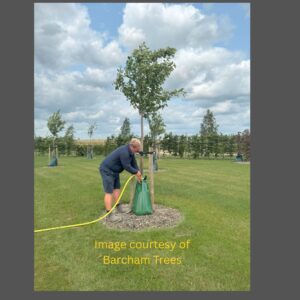
Young trees need reliable and consistent watering, particularly during their first few growing seasons. Deep, occasional watering encourages roots to grow downwards in search of moisture, building strength and resilience.
Without this, trees can become weak, stunted, and vulnerable during dry spells — often leading to failure and replacement.
Weed and Grass Control
Grass and weeds compete directly with young trees for water and nutrients.
Keeping a clear area of around one metre in diameter around the base allows the tree to access the resources it needs to establish properly.
Preventing Strimmer Damage
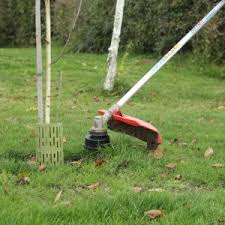
One of the most common and avoidable causes of young tree failure is damage from a strimmer or lawnmower.
Even a small wound to the bark can lead to decay, disease, and long-term structural problems. Creating a mulch ring around the base removes the need to strim close to the trunk and significantly reduces this risk.
Mulching, Simple but Effective
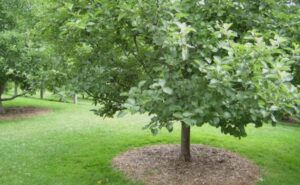
A layer of mulch around the base of the tree of around 5–7 cm works well, but it’s important to keep mulch a few centimetres clear of the trunk to avoid causing health issues.
A simple layer of mulch around the base of the tree can make a huge difference.
It helps to:
- Retain moisture
- Regulate soil temperature
- Suppress weeds
- Improve soil health over time
Think of it as creating the right environment for the roots to do their job properly.
Support, But Not Forever
Stakes and ties are there to support young trees while their root system establish, but they shouldn’t be forgotten.
Ties that are too tight can cut into the bark and restrict growth, creating weak points. As a general rule, trees should be checked annually, and stakes removed once they can stand independently, usually after one or two growing seasons.
Leaving them in place too long can actually slow root development.
Pruning, Setting the Structure Early
Light, well-timed pruning in the early years helps guide the tree into a strong, balanced shape.
This is far easier and far more effective than trying to correct problems later in life.
A small adjustment early on can prevent a much bigger issue in the future.
Protection from Animals
Young trees are vulnerable to damage from rabbits, deer and other animals.
Tree guards offer simple, effective protection, but should be checked regularly to ensure they’re not restricting growth as the tree develops.
The Financial Case for Good Aftercare
Looking after young trees properly isn’t just good practice; it makes sound financial sense.
- Avoiding replacement costs
A healthy tree can last decades, even centuries. A failed tree often means paying again for removal and replanting. - Reducing future maintenance
Trees that establish well need far less intervention later. Poor structure, damage and weak roots can all lead to expensive remedial work. - Enhancing property value
Well-maintained trees improve the appearance of a property and bring long-term benefits such as shade, screening and privacy. - Minimising risk
Neglected trees are more likely to become unstable or diseased, increasing the risk of damage to surrounding areas.
A Final Thought
A small amount of care in the early years can make the difference between a tree that simply survives and one that thrives for generations.
Watering, mulching, protecting the trunk and checking supports are all straightforward tasks, but together they create the foundation for a strong, healthy and valuable tree.
Further Guidance
If you’d like to explore this in more detail, there’s plenty of excellent guidance available:
Woodland Trust — Tree planting and care advice
The Tree Council — Caring for newly planted trees
NHS Forest — Tree maintenance guide
Royal Horticultural Society — Planting and caring for trees and shrubs
Or, if you’d prefer to talk it through, please feel free to give Tree Maintenance a call; we’re always happy to help.