Have you ever heard a loud crack on a hot summer’s day and discovered a large tree branch lying on the ground?
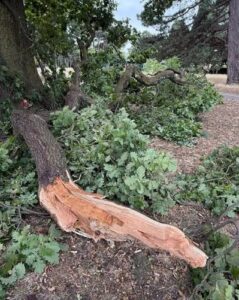
Most of us expect branches to fall during storms or high winds, and it therefore comes as quite a surprise when a large limb suddenly breaks away from an otherwise healthy-looking tree during warm, still weather.
This phenomenon is known as Summer Branch Drop.
Although arborists have recognised it for many years, it remains one of the least understood aspects of tree behaviour.
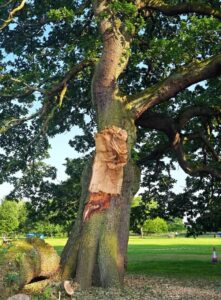
What Is Summer Branch Drop?
Summer Branch Drop describes the sudden failure of a large branch, usually from a mature broadleaved tree, during periods of warm or hot weather.
It has been reported most commonly on species such as:
-
Oak
-
Beech
-
Horse Chestnut
-
London Plane
-
Poplar
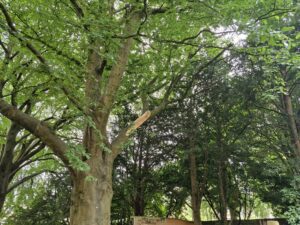
What makes it unusual is that there may be no obvious cause. The weather is often calm, there may be no visible decay, and the tree can appear healthy and in full leaf.
Why Does It Happen?
The honest answer is that we do not yet know for certain.
Various theories have been suggested over the years, including changes in moisture, movement within the tree, internal stresses, the weight of a full summer canopy, hidden defects and sudden changes in temperature or humidity.
The current thinking is that Summer Branch Drop is probably not caused by one single factor, but by a combination of several conditions occurring at the same time.
Sometimes, even a healthy-looking branch can simply reach the point where it can no longer support itself.
Can It Be Predicted?
Unfortunately, not reliably.
This is one of the reasons Summer Branch Drop receives so much attention within the arboricultural profession.
Routine tree inspections remain extremely important because they identify many common defects such as decay, weak branch unions and structural problems.
However, Summer Branch Drop presents a particular challenge because the branches involved often show few, if any, obvious warning signs before they fail.
Should You Be Worried?
For most homeowners, the answer is no.
Despite the dramatic photographs that occasionally appear in the media, Summer Branch Drop is considered to be a relatively rare event.
Trees provide enormous benefits. They cool our gardens during hot weather, provide shade, support wildlife, improve air quality and make our surroundings more enjoyable.
The answer is certainly not to remove mature trees simply because they might shed a branch.
Instead, a sensible approach is best.
If you own mature trees, have them inspected periodically by a qualified arboricultural consultant or experienced tree contractor, particularly if they overhang buildings, roads, footpaths or areas where people regularly gather.
Regular inspections remain the most effective way of identifying the far more common causes of branch failure.
A Little Common Sense Goes a Long Way
During prolonged periods of hot weather, it is sensible to avoid spending extended periods sitting or parking directly beneath large overhanging limbs of mature trees, particularly after long dry spells or when rain follows drought.
This is not because trees are inherently dangerous, but because no living organism can ever be entirely risk free.
Final Thoughts
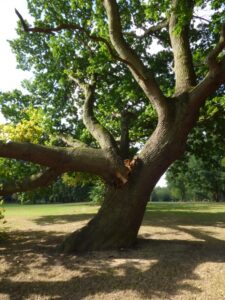
One of the fascinating things about trees is that, despite centuries of study, they still can surprise us.
Summer Branch Drop is a good reminder that trees are living, dynamic structures responding to their environment in ways we do not yet fully understand.
The good news is that these events remain uncommon. The best approach is not to be fearful of mature trees, but to appreciate their enormous benefits while managing them sensibly through regular inspection and appropriate maintenance.
If you have concerns about a mature tree on your property, or one close to your home, we are always happy to offer straightforward, practical advice.
Further Reading
If you would like to learn more about Summer Branch Drop, this is an excellent source of further information, from a legal expert, specialising in trees:
- Tree Law – Summer Branch Drop: When apparently healthy trees suddenly shed large limbs (click here)