The Treehouse Years
(And what they quietly teach us about trees)
It’s funny how certain ideas seem to belong entirely to our childhoods. Treehouses are one of them.
You don’t hear many adults saying, “I’m thinking of building a treehouse this weekend.” But mention it to a child and something shifts immediately. Eyes light up, plans begin forming. Suddenly, that ordinary tree at the bottom of the garden isn’t just a tree anymore; it’s potential!
A lookout.
A den.
A world of its own.
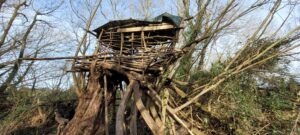
I was reminded of this recently while out surveying near Gloucester and came across a fantastic treehouse built on an old collapsed Willow. A few bits of timber, a rope, what looked suspiciously like part of a pallet, nothing you’d find in a glossy brochure or holiday park, but absolutely perfect.
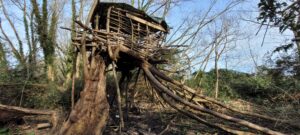
It had been built with enthusiasm rather than precision.
And that, I think, is the point.
Trees from a different perspective
Children see trees very differently from adults.
Where we see structure, condition and long-term management, they see an opportunity. A branch isn’t a limb to be assessed; it’s something to stand on. A fork in the trunk becomes a natural seat. Height isn’t a risk; it’s an adventure!
And to be fair, they’re not entirely wrong.
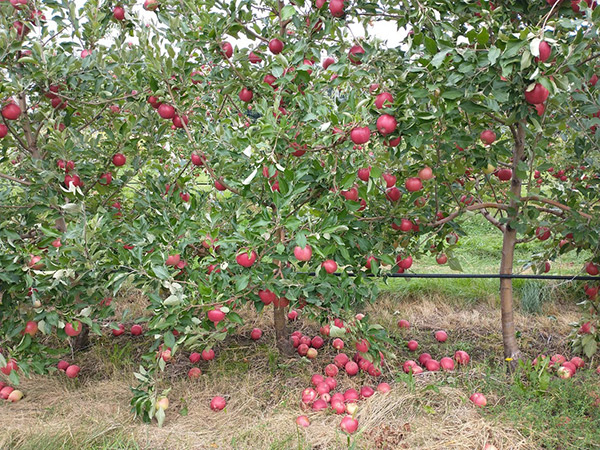
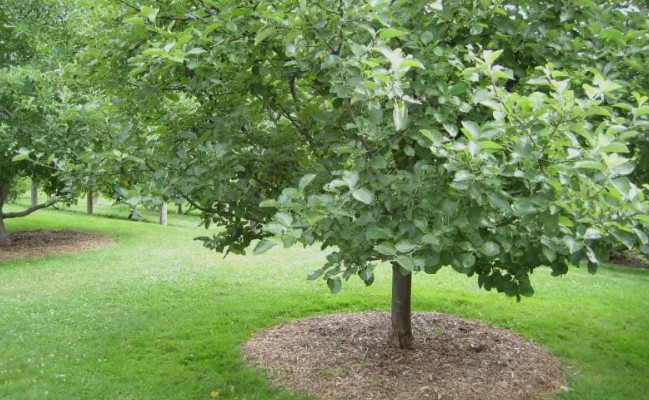
Some of the best trees for climbing, and for the occasional treehouse, are those with wide, spreading forms. Apple, Oak, Beech, trees that invite you in rather than keep you out. Strong branch unions, good spacing, and just enough imperfection to make things interesting.
Of course, not every tree is suitable. Some are too young, too brittle, or simply not built to carry that kind of load. But when the right tree meets the right imagination, something rather special happens.
The value of good enough: Treehouses are rarely masterpieces of engineering.
They lean, they creak, and they rely on a surprising amount of optimism, and yet, they work, at least well enough for their purpose. There’s something refreshingly honest about that.
In a world where so much is designed, specified and perfected, a child-built treehouse is wonderfully free of overthinking. It exists because someone decided it should, and that was reason enough.
Trees seem to tolerate this approach remarkably well.
They bend slightly under the added weight, they grow around fixings, they adapt and quietly accommodate this temporary phase in their long lives.
From a professional point of view, we might wince slightly at a few nails or a bit of rope in the wrong place. But more often than not, the tree carries on regardless, unfazed by the enthusiasm of its smaller companions.
A brief moment in time.
What strikes me most about treehouses is how temporary they are. Not in the sense that they fall apart, although many do, but in the way they belong to a very specific moment in our lives. A few years, perhaps. A phase that comes and goes almost without notice.
One summer, it’s everything. The next, it’s quietly forgotten.
The tree, meanwhile, continues. It grows past the structure, branches thicken, and the once-perfect climbing route becomes slightly more awkward. The treehouse, if left, slowly weathers and softens back into the landscape.
In time, it becomes part of the tree’s story, a small, human chapter in a much longer life.
What trees quietly teach?
There’s a subtle lesson in all of this.
Children approach trees with curiosity, confidence and very little fear of getting it wrong. They don’t worry too much about whether something is perfectly designed; they try it, adjust it, and carry on.
Trees respond in kind. They don’t demand perfection, they don’t rush, they allow space for experimentation, for mistakes, for growth — both theirs and ours.
As adults, we tend to lose a bit of that.
We become more cautious, more aware of risks, more inclined to manage rather than explore. And while that has its place, particularly when it comes to safety, it’s easy to forget the simple joy of interacting with trees more instinctively.
A balanced approach
Of course, there is a balance to be struck.
Trees should not be damaged unnecessarily, and safety matters, particularly where height and weight are involved. Not every tree is suited to climbing or construction, and sometimes guidance is needed to ensure both tree and child come to no harm.
But equally, not every interaction needs to be controlled or refined.
Sometimes, a slightly wobbly platform in the branches of a well-suited tree is exactly what’s needed.
The stories trees keep
Now and then, I come across the remains of an old treehouse, a few boards half-hidden by growth, a nail long absorbed into the wood, the faint outline of where something once was, and they’re easy to miss if you’re not looking.
But when you do notice them, they tell a quiet story. Not about the structure itself, but about the time it represents. A reminder that trees are not just part of the landscape; they are part of our lives, in ways both practical and deeply personal.
Perhaps that’s the real value of a treehouse.
Not the construction, or even the adventure, but the connection it creates, however briefly, between people and trees.
Something that, if we’re lucky, stays with us long after we’ve climbed back down.