Why Is My Box Hedge Turning Brown?
Few plants are as closely associated with the British garden as Box (which also happens to be one of a small club of native trees and large shrubs).
Whether clipped into neat hedges, elegant topiary balls, spirals, or intricate parterres, Box has been a favourite of gardeners for centuries. So, when it starts turning brown, it is understandable that alarm bells begin to ring.
Over the past few years, two problems have become increasingly common across the UK: Box Tree Caterpillar and Box Blight.
While both can leave plants looking unhealthy, they are very different problems and require different approaches.
The first step is working out which one you are dealing with.
Box Tree Caterpillar – The Hungry Invader
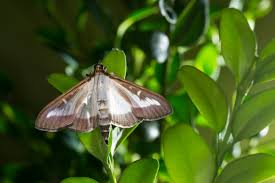
The Box Tree Moth is a relatively recent arrival in the UK, but its caterpillars have quickly established themselves as one of the most destructive pests affecting Box plants.
The caterpillars feed on the leaves, often stripping plants surprisingly quickly.
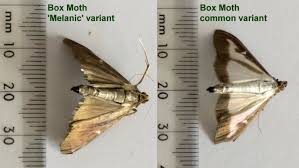
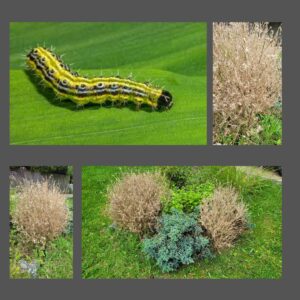
Typical signs include:
- Leaves being eaten, sometimes leaving only the leaf veins behind
- Fine silk webbing within the plant
- Green caterpillars with black and white stripes
- Small dark droppings beneath the shrub
- Thin, patchy, or completely defoliated sections
One of the challenges is that the caterpillars tend to hide deep within the dense foliage, meaning significant damage can occur before they are spotted.

Box Blight – A Different Problem Entirely
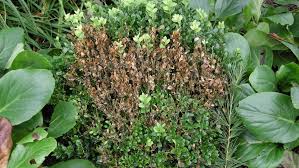
Unlike caterpillar damage, Box Blight is a fungal disease.
Rather than eating the leaves, the disease causes foliage and stems to die back.
Signs of Box Blight include:
- Brown leaves that often remain attached to the plant
- Black streaks or lesions on the stems
- Patches of dead foliage spreading through the plant
- No webbing
- No caterpillars or droppings
The disease thrives in damp, humid conditions, particularly where plants are densely clipped, and air movement is poor.
Unfortunately, a plant can suffer from both Box Blight and Box Tree Caterpillar at the same time, making diagnosis a little more challenging.
What Can You Do About Box Tree Caterpillar?
The good news is that caterpillar infestations can often be managed successfully if caught early.
Treatment options include:
Hand Removal
On smaller plants, simply removing caterpillars and webbing by hand can make a significant difference.
Biological Control
Products containing the bacterium Bacillus thuringiensis (Bt) are widely regarded as one of the most effective treatments. This naturally occurring bacterium targets caterpillars and is most effective when applied to younger larvae.
Insecticides
A range of approved garden insecticides are available and can be effective when used according to the manufacturer’s instructions.
Monitoring Traps
Pheromone traps can help identify when adult moths are active, providing an early warning that a new generation of caterpillars may soon appear.
Managing Box Blight
Box Blight requires a different approach.
Management focuses on reducing the spread of the disease and improving growing conditions.
Helpful measures include:
- Pruning out infected growth
- Collecting and disposing of fallen leaves
- Cleaning tools between plants
- Improving airflow through and around the hedge
- Avoiding overhead watering where possible
- Reducing congestion within dense planting
Fungicides are available for gardeners, although they are generally more effective at helping prevent infection than curing severe outbreaks.
In the most serious cases, heavily affected plants may eventually need replacing.
Can Box Recover?
Often, yes.
Many Box plants that have suffered caterpillar damage can recover remarkably well once the infestation has been controlled.
Recovery from Box Blight can be slower and depends on how advanced the infection has become. However, many plants continue to perform well for years with careful management.
The key is early intervention.
A quick inspection now and again can often spot problems before they become serious.
Many of our clients swear by Topbuxus products for helping them look after their box plants; this is not an endorsement of their products.
Final Thoughts
If your Box hedge or topiary is starting to look thin, brown, or unhealthy, don’t assume the worst.
Take a closer look. Are there signs of caterpillars and webbing? Or are you seeing the symptoms of Box Blight?
Correct identification is the first step towards finding the right solution.
With a little vigilance and timely treatment, many Box plants can continue to provide years of structure, colour, and character in the garden.
Further Guidance:
For more information, these organisations provide excellent advice:
- Royal Horticultural Society (RHS) – Box moth/caterpillars https://www.rhs.org.uk/biodiversity/box-tree-caterpillar
- Royal Horticultural Society (RHS) – Box Blight https://www.rhs.org.uk/disease/box-blight
- National Trust https://www.nationaltrust.org.uk/discover/gardens-parks/how-to-deal-with-box-tree-caterpillar