Helping Trees Through a Heatwave
With another spell of hot, dry weather affecting much of the UK, it’s not just our lawns that are beginning to look thirsty. Trees, particularly those in gardens and urban areas, are also feeling the effects.
The good news is that trees are remarkably resilient. They’ve evolved to cope with changing weather, and many will recover perfectly well once conditions improve. Even so, prolonged heat and drought can put them under considerable stress, especially younger trees that are still becoming established.
Knowing what to look for and when to step in can make all the difference.
How Do Trees Cope with Hot Weather?
On warm days, trees lose water through tiny pores in their leaves in a natural process called transpiration. It’s one of the ways they keep themselves cool.
When there’s plenty of moisture in the soil, this works remarkably well. However, during prolonged dry spells, the tree begins to lose more water than it can replace.
To conserve moisture, it begins to make compromises.
Growth slows, new shoots may stop developing, and in some cases, the tree sheds leaves early to reduce water loss. Although this can look alarming, it’s often a survival strategy rather than a sign that the tree is dying.
You may notice:
- Leaves curling or wilting.
- Leaves are turning to expose their paler undersides.
- Brown or scorched leaf edges.
- Premature leaf fall.
- Reduced new growth.
- Bark cracking or sunscald, particularly on young or thin-barked trees
These are all common responses to heat and drought.
It’s Not Just the Heat
Dry, desiccating winds can make matters worse.
Even when some moisture remains in the soil, hot winds draw water rapidly from the leaves, increasing stress on the tree. Young trees and those growing in pots or hard urban landscapes are particularly vulnerable because their roots have access to much less water.
Which Trees Need the Most Help?
Fortunately, mature, well-established trees can usually cope surprisingly well with short periods of dry weather.
The trees most likely to benefit from your help are:
- Newly planted trees (generally those planted within the last three years).
- Trees growing in paved areas or confined planting pits.
- Trees in containers.
- Trees already weakened by pests, disease or previous drought.
These should be your priority if water is limited.
Water Well, Not Often
One of the most common mistakes is giving a tree a quick splash with the hose every evening.
A deep soak every week is far more beneficial than frequent light watering.
As a general guide:
- Newly planted trees benefit from around 50 litres of water at least once a week during prolonged dry weather throughout their first three growing seasons.
- Water early in the morning or late in the evening to reduce evaporation.
- Apply water slowly so that it soaks deeply into the soil rather than running away across the surface.
- Remember that many of a tree’s absorbing roots lie beneath the edge of the canopy, not immediately beside the trunk.
Mulch Is Your Best Friend
If there’s one thing almost every tree appreciates during a drought, it’s mulch.
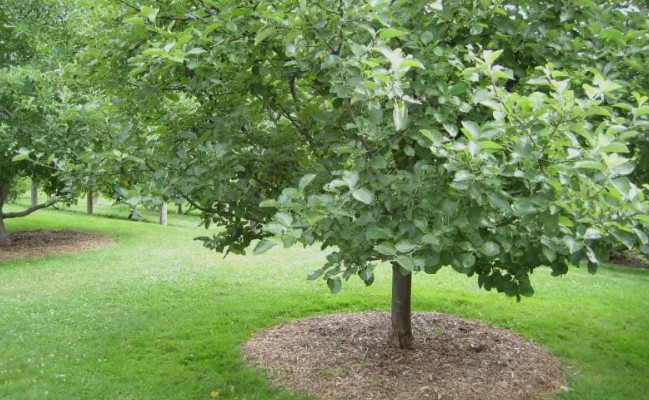
A layer of woodchip or composted bark around the base helps the soil retain moisture, keeps temperatures more even and suppresses weeds competing for water.
Aim for a circle about 1 metre wide and 10cm deep, but avoid piling mulch directly against the trunk.
Looking Ahead
As our summers become warmer and drier, choosing the right tree for the right place is becoming increasingly important.
Species such as:
- Silver Birch
- Field Maple
- Hornbeam
- Hawthorn
- And Amelanchier generally cope well with drier summers, once established.
- Mediterranean species such as Olive, Fig and Judas Tree can also perform well in sunny, sheltered gardens.
Of course, even drought-tolerant trees need regular watering during their first few years while they establish.
Final Thoughts
Trees have an extraordinary ability to adapt to changing conditions, but even the toughest specimens appreciate a little help during prolonged hot weather.
A deep watering now and again, combined with a generous layer of mulch, is often all that’s needed to help a young tree through a difficult summer.
The rewards are well worth the effort. Healthy trees provide shade, support wildlife, improve air quality and make our gardens and neighbourhoods more enjoyable places to live.
Further Reading
If you’d like to learn more about caring for trees during hot weather, these organisations provide excellent advice:
- Trees.org.uk – Watering young trees in hot weather https://www.trees.org.uk/Help-Advice/Public/Watering-young-trees-in-dry-weather
- RHS – Drought-resistant Gardening https://www.rhs.org.uk/garden-design/drought-resistant-gardening